Learn astrology · Fundamentals
History of astrology: 4,000 years from Babylon to TikTok
The history of astrology across six eras: Mesopotamia, Hellenistic Greece, the Arab-Persian world, the Renaissance, its collapse, and its modern revival.
9 min read · Updated 2026-06-11
The astrology you check on an app today did not fall from the sky. It is the sediment of four thousand years of practice that refined itself, traveled, divorced science, and came back in other forms. Understand that history and you understand why a natal chart looks the way it does, and why words like "rising sign" or "trine" sound the way they do.
Mesopotamia: the matrix (-2000 → -300)
It all begins in Mesopotamia, in the valley of the Tigris and the Euphrates (modern Iraq). The Babylonians, heirs of the Sumerians and the Akkadians, were the first to watch the sky systematically and keep written records of it. Not out of mysticism. Out of agricultural and political need. When to flood, when to sow, when to attack? The sky gives signs.
Around -1900 to -1700, they recorded their observations on clay tablets. The most famous compilation, the Enuma Anu Enlil, gathers some 7,000 celestial omens across 70 tablets. One example: "If the Moon is surrounded by a halo and Jupiter stands within it, the king will be besieged."1 This is a long way from a modern natal chart, but the logic is already there: a celestial event, a terrestrial meaning, a reading for the state.
Back then astrology was global and political (today we call it mundane astrology, from the Latin mundus). It dealt with kings, harvests, wars. Not yet with individuals.
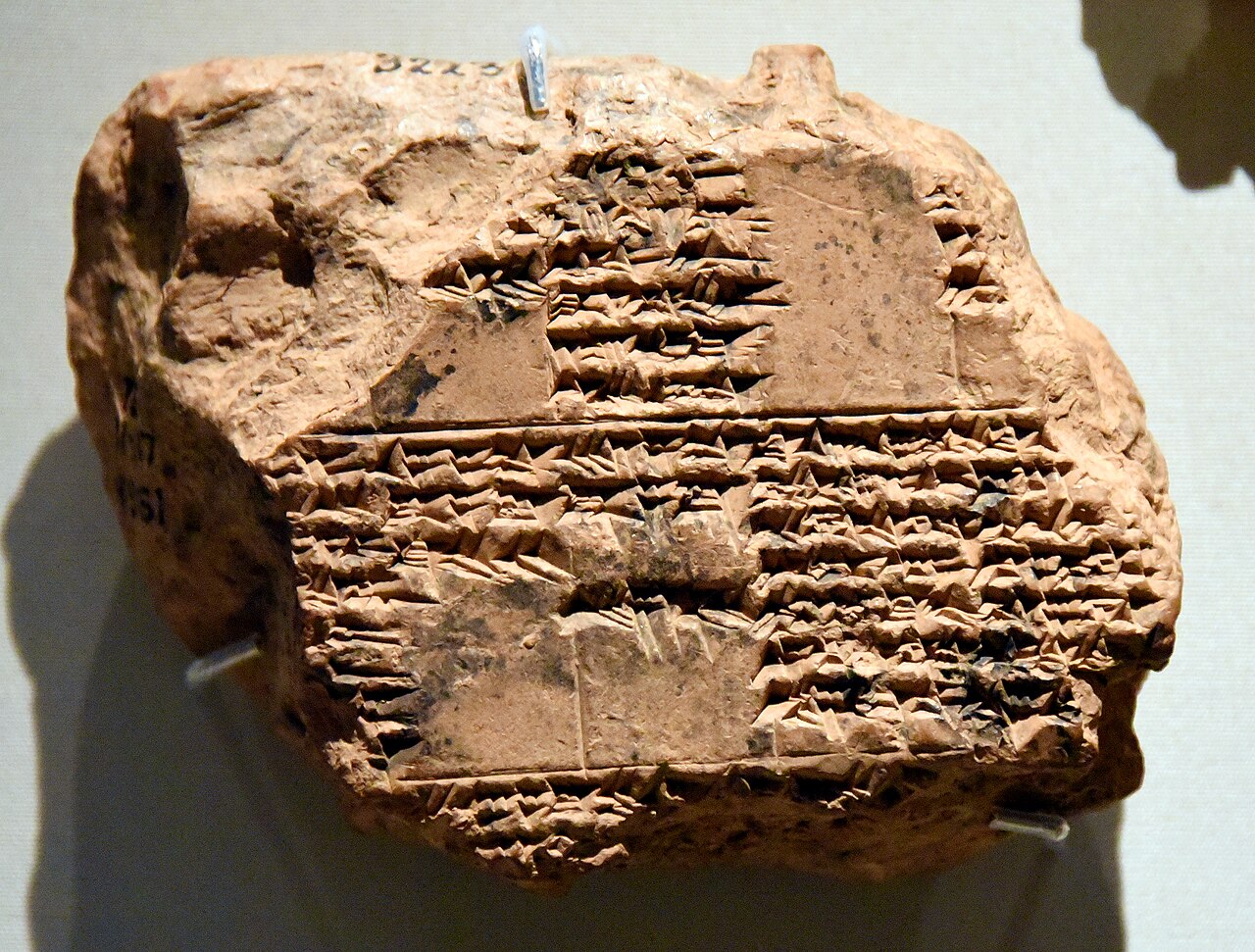
Around -500, the Babylonians divided the ecliptic into 12 equal sectors of 30°. That is the birth of the zodiac as we know it. The names of the signs (Aries, Taurus, and so on) come from the constellations that sat there at the time, but the division itself is mathematical, not stellar. That distinction will come up again and again in this guide.
In the 4th century BCE, after the conquests of Alexander the Great, Babylonian knowledge spread toward Greece and Egypt. The ground was ready for the great Hellenistic synthesis.
Hellenistic Greece: the modern grammar (-300 → +300)
It was in Alexandria, in Ptolemaic Egypt, that astrology became what we recognize today. The Greeks, formidable geometers, took the Babylonian data and added mathematical rigor and individualization.
A few of the period's major inventions:
- The personal natal chart. Calculating where the planets sat at the precise moment of a person's birth. This was a major cultural break: the sky no longer spoke only to kings, it spoke to you.
- The 12 houses. A division of the local sphere (the sky as seen from a given place and instant), distinct from the zodiac. A planet can sit in sign X and house Y.
- The aspects. The geometric angles between planets (60°, 90°, 120°, 180°), read as carriers of tension or harmony.
- The angles. The Ascendant (the point rising in the east), the Midheaven (the ecliptic zenith), and their opposites.
The dominant figure is Claudius Ptolemy (Alexandria, ~100-170). He was not only an astrologer. He was also the greatest astronomer of antiquity, author of the Almagest, the treatise that would remain the astronomical reference until Copernicus. And it is precisely the same man who wrote the Tetrabiblos ("Four Books"), the most influential astrology manual in the history of the West.
That double role matters: at the time, astronomy and astrology were not distinguished. They were two faces of one discipline, the study of the sky, one measuring and the other interpreting. The divorce would come 1,500 years later.
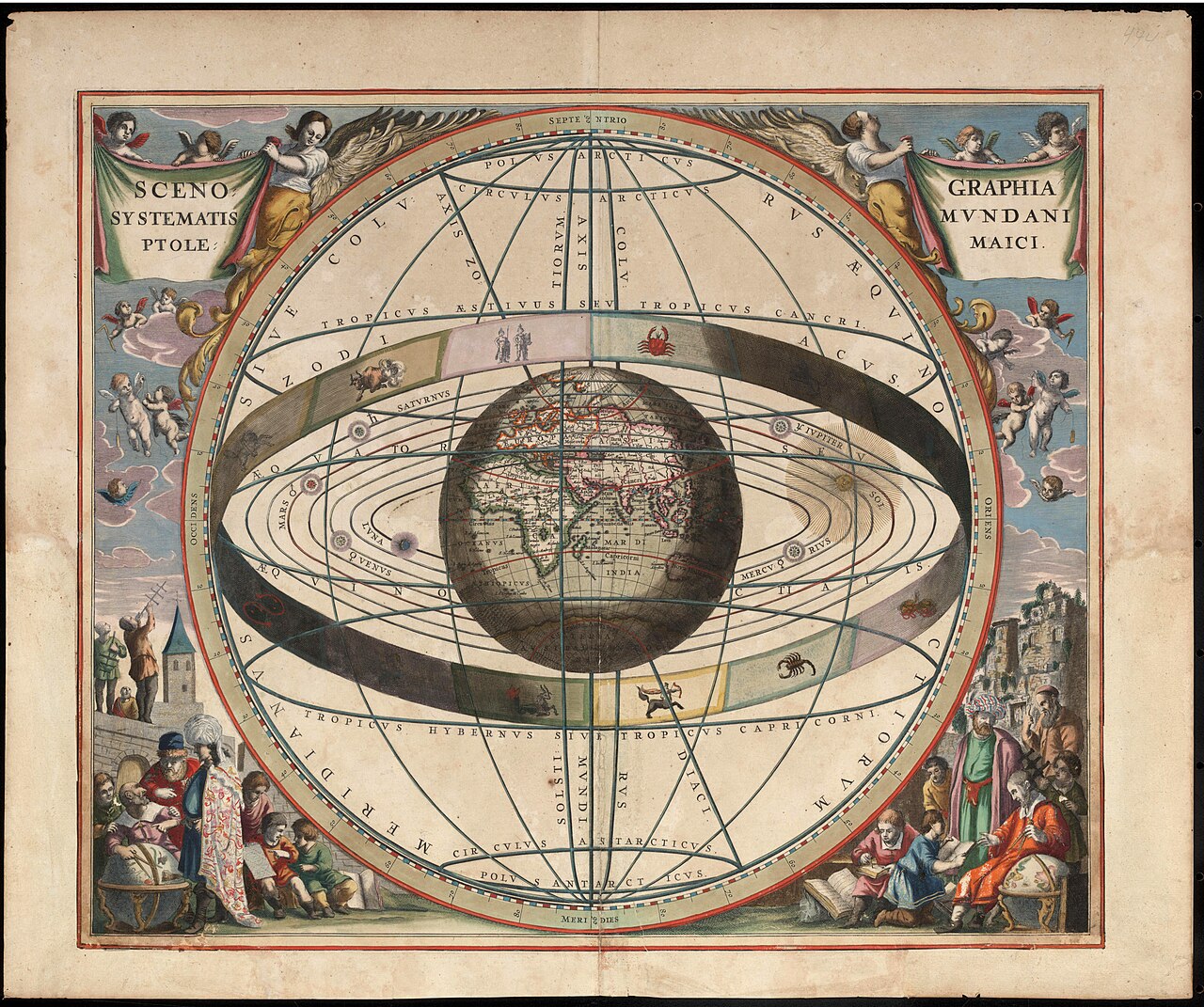
Other Hellenistic authors, among them Vettius Valens, Dorotheus of Sidon and Manilius, produced manuals that gave the field a durable structure. Most of the techniques rediscovered by modern traditional astrology (the "Hellenistic revival" of the 2010s) come from these sources.
The Arab-Persian world: transmission and refinement (800-1200)
When the Roman Empire collapsed, much of Greek astrological knowledge was lost in the West. It survived thanks to Byzantium, and then above all thanks to the Arab-Persian world, which from the 8th century onward translated Greek texts on a massive scale and enriched them.
In Baghdad, under the Abbasid caliphs, the House of Wisdom (Bayt al-Hikma) translated Ptolemy, Aristotle, and the Greek astrological manuals. The Persian and Arab astrologers did not just pass the work along. They refined it.
A few figures worth knowing:
- Abu Ma'shar al-Balkhi (787-886), Latinized as Albumasar. His Great Introduction to Astrology was translated into Latin in the 12th century and became the reference manual in Europe for 400 years.
- Al-Kindi (~801-873), philosopher and theorist of astrology as a physics of celestial "rays." His theory of stellar influence through radiation shaped a great deal of medieval thought.
- Al-Biruni (973-1048), the Persian polymath behind the Kitab al-Tafhim, an encyclopedic treatise that covers everything: zodiac, houses, aspects, Arabic parts, transits. An absolute reference.
This is also the era when the Arabic parts (the Greek lots) crystallized, points computed mathematically from combinations of planets. The Part of Fortune is the best-known survivor.
When Islamic Spain (Al-Andalus) translated these texts into Latin at Toledo in the 12th century, Europe rediscovered an astrology that was already highly sophisticated.
The European Renaissance: the peak and the crack (1400-1700)
In the 15th and 16th centuries, astrology sat at the height of its institutional prestige in Europe. Universities taught it. Kings kept official astrologers (Catherine de Medici had Cosimo Ruggieri). Physicians cast charts for their patients, since humoral medicine held that the planets influenced the bodily humors.
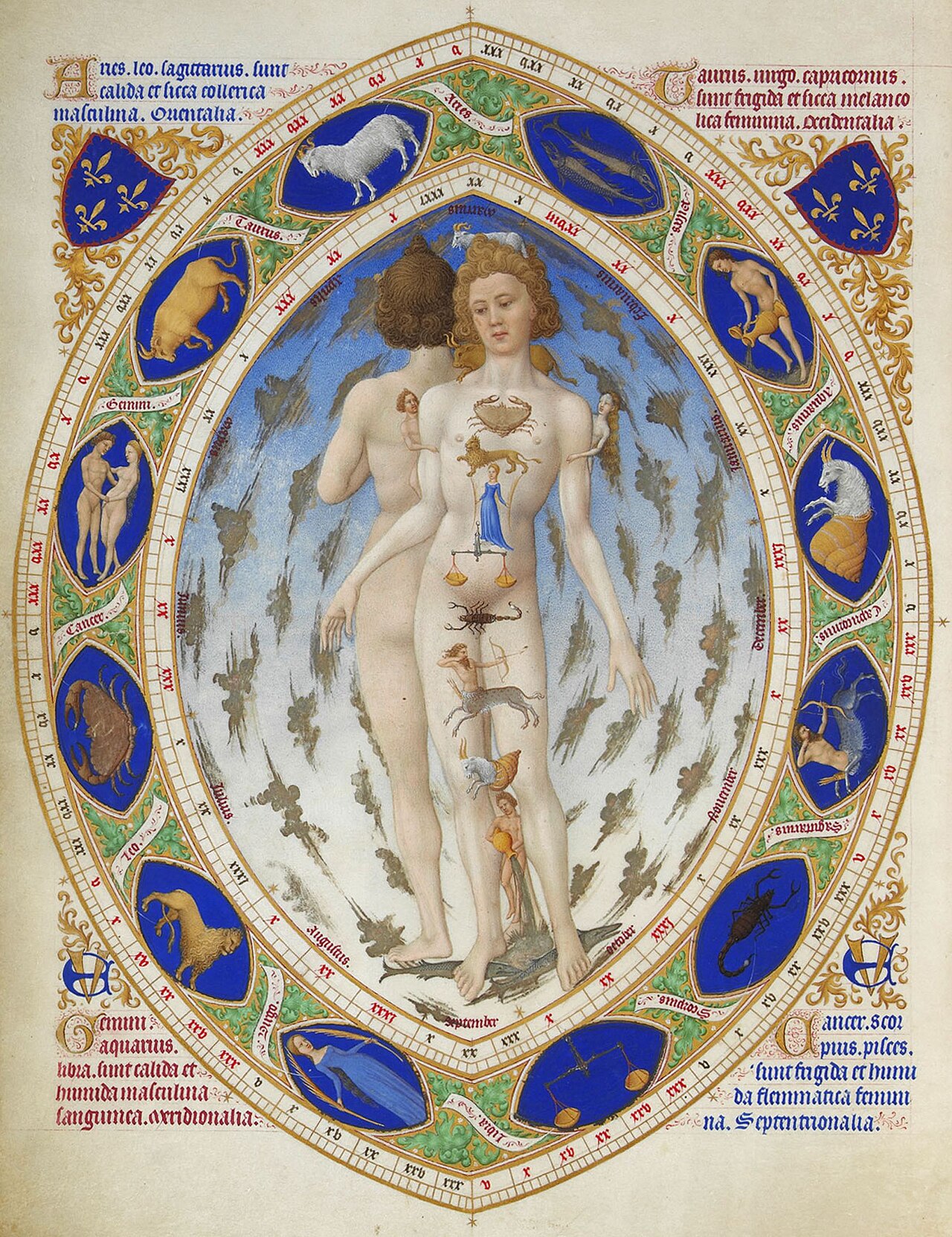
A handful of names sum up the period:
- Marsilio Ficino (1433-1499), Florentine Neoplatonist philosopher, translator of Hermes Trismegistus, who defended a "natural," non-deterministic astrology.
- Nostradamus (1503-1566), physician and astrologer whose Centuries would make a fortune in popular culture.
- Tycho Brahe (1546-1601), the greatest astronomical observer of the pre-telescope era, who practiced astrology (notably for King Frederik II of Denmark) while measuring the stars with unmatched precision.
- Johannes Kepler (1571-1630). The same Kepler who formulated the laws of planetary motion was also court astrologer to Wallenstein. But Kepler is also the one who began to separate the two disciplines. He attacked the traditional techniques harshly, proposed a rational reform of astrology ("the faithful daughter of astronomy feeds her mother"), and stripped it of many of its traditional ornaments.
It is under Kepler's pen, paradoxically, that the crack between astronomy and astrology starts to open. Not because he rejects astrology, he defends it, but because he examines it with the new tools of modern science.
Institutional collapse: the Enlightenment (1700-1900)
In the 18th century, astrology vanished from the Western scholarly landscape, in two movements.
The first was scientific. Newton published the Principia in 1687. Universal gravitation explained planetary motion without any need to invoke a "quality" or an "influence" proper to each planet. Mars is no longer the god of war, it is a ball of rock in orbit. The Aristotelian-Ptolemaic metaphysics on which traditional astrology rested simply fell apart.
The second was institutional. The Enlightenment and the educational revolution that followed removed astrology from university curricula. In 1666 the Académie des Sciences was founded in Paris explicitly without astrology. The astrology chairs disappeared. Kings stopped keeping official astrologers.
Astrology did not die. It survived in almanacs, popular magazines, folk practice. But it lost its scholarly legitimacy. When Voltaire mocked the "horoscope-makers," he was pushing on a door that would not reopen for 150 years.
Modern revival: Alan Leo, Jung, Co-Star (1900 →)
Astrology came back at the start of the 20th century, but profoundly transformed.
Alan Leo (1860-1917), a British astrologer and theosophist, played a pivotal role. He simplified astrology to make it accessible (at the cost of depth, his traditionalist critics would say), shifted the emphasis toward character rather than events, and popularized the formula "your sign equals who you are," the template for every magazine horoscope since.
Dane Rudhyar (1895-1985), a French-American composer and astrologer, founded humanistic astrology, heavily influenced by Jungian psychology. For Rudhyar the chart is not a fate, it is a map of psychic potential. The shift is decisive: astrology slides from predictive to psychological.
Carl Jung (1875-1961) himself, without practicing astrology, took it seriously as a system of archetypes. His correspondence with André Barbault and his chapter in Synchronicity contain a (controversial) statistical study of married couples' charts. Within the psychological field, Jung lent legitimacy to a certain astrology as a tool for self-knowledge.
In the 1960s and 70s, the American counterculture took up astrology en masse. Think of Aquarius in the musical Hair. Horoscope columns flooded the press. This was the era of the pop astrology book.
In the 2010s, two movements converged:
- A traditional revival (the Hellenistic revival), driven by practitioners like Chris Brennan and Demetra George, who returned to the long-forgotten Hellenistic texts (Valens, Dorotheus). They argued for a return to precise techniques, sometimes more predictive, and for the use of the Whole Sign system.
- A mass-market explosion through apps: Co-Star (launched in 2017), The Pattern, Sanctuary, Time Passages. More recently, TikTok astrology and the ubiquity of the "Big Three" idea (Sun, Moon, Rising). Co-Star claimed 30 million users in 20222, mostly Gen Z women.
Sidebar: why the history matters
When you read "your Leo rising" on an app, you are using a Greek word (the Hellenistic concept of horoskopos, "the one who watches the hour") to describe a point that depends on the system of 12 houses invented in Alexandria, using a sign (Leo) whose name comes from a Babylonian constellation. Without those 4,000 years of sediment, the word means nothing. That is why astrology cannot simply be "reinvented." It is a historical language, and a language is not invented, it is handed down.
The point, as a user, is not to "believe" or "not believe." It is to understand which symbolic system you are walking around in: where the words come from, what they once meant, what they mean now. Everything else in this guide, starting with chapter 3, is here to help you do exactly that.
Next chapter: the astrological sky and its astronomical basics.