Learn astrology · Fundamentals
What is astrology, really?
An honest definition of astrology: a symbolic language built on real astronomy, why it is not a science, and why so many people still take it seriously.
5 min read · Updated 2026-06-11
A definition you can actually stand behind
Astrology is a symbolic language that reads the positions of the celestial bodies (the Sun, the Moon, the planets) at a given moment and place, and draws meaning from them about human experience: character, the timing of a life, the dynamics between people.
Three words in that sentence are worth slowing down on.
- Symbolic. Astrology does not claim that Mars causes anger. It says that Mars, inside a system of signs handed down for 4,000 years, means drive, friction, the urge to act. That is semiotics, not physics.
- Reading. There is no single "truth" to a chart. Two skilled astrologers will read the same map with different emphases. It is a reading practice, not a calculation.
- Celestial positions. Here nothing is symbolic. The positions are measured to the arcsecond by scientific ephemerides. The geometry is hard; the interpretation is soft.
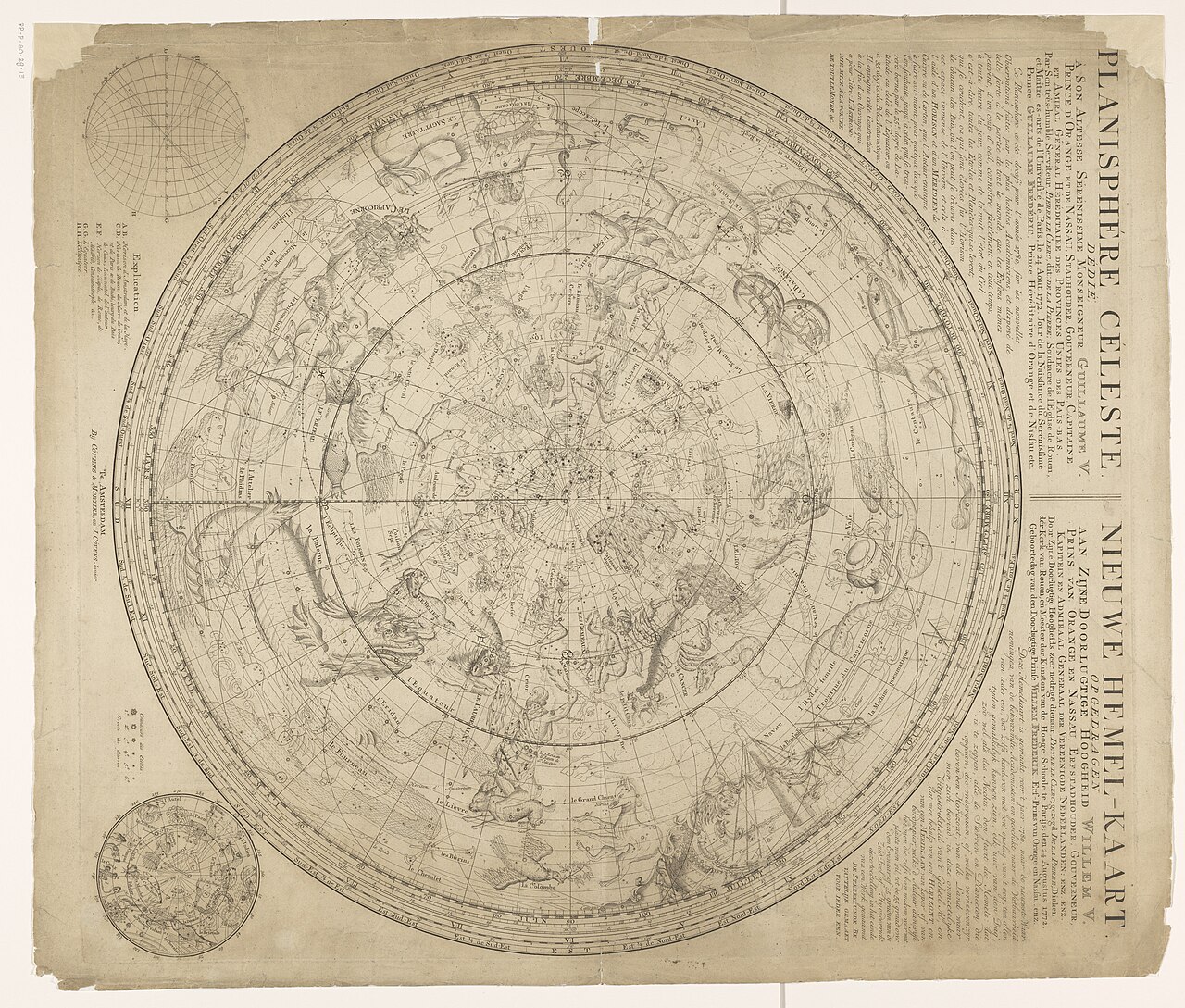
Astrology is not astronomy
This is the most common confusion, and the most useful one to clear up right away.
Astronomy is the science that studies celestial bodies. It measures, models, predicts. When an astronomer says "Mars will be above the horizon of Bordeaux at 2:47 a.m. on 15 June 2026," they are right or wrong, and you can check with a telescope. Astronomy advances, makes mistakes, corrects them, and builds knowledge that accumulates.
Astrology uses astronomy's data as raw material, then does something else with it. It adds a layer of symbolic interpretation. Mars in Aries in the second house means nothing to an astronomer. To an astrologer it is a trio of symbols that suggests a reading.
Put another way: astrology consumes astronomy to function, but it produces meaning, not verifiable knowledge. That asymmetry is what makes it singular, and it is also why the usual scientific attacks land easily yet miss the point. Nobody asks poetry to forecast the weather.
Key idea. Astrology is not a broken science. It is a symbolic system that runs on astronomical data. Confusing the two is like blaming a subway map for not being drawn to scale.
Why so many people "believe" in it
In a 2020 IFOP survey1, 58% of French respondents said they believed in at least one para-scientific discipline (astrology, fortune-telling, numerology, and so on). For astrology specifically the figures sit around 30 to 40% depending on how the question is phrased, with peaks above 50% among women aged 18 to 24. Practice runs higher still: nearly one French person in two has read their horoscope, and one in four knows their rising sign.
Those numbers hide a nuance, though. Dig a little and few people "believe" in astrology in the strong sense, the way you would believe in gravity or a religious dogma. Most adopt a functional stance: it helps them think about themselves, talk about themselves, give shape to their hunches about other people. Less a belief than a narrative tool.
The mood is caught well by the line "I don't believe in astrology, but my Scorpio rising sure does," which has been circulating online since 2017. Translation: I'm not fooled, and yet this language speaks to me. Co-Star alone has 30 million users2, and almost all of them run on that exact mode.
So why does it work? A few reasons converge.
- The Barnum effect (or Forer effect): descriptions general enough that everyone recognises themselves in them. It is documented, and it is a real part of why astrology feels accurate.
- A structured vocabulary. 12 signs x 10 planets x 12 houses is 1,440 possible boxes. Rich enough to talk about yourself with some precision, coded enough not to feel flat.
- Community. Knowing your chart means joining a shared language, especially online.
- Honest psychological use. Jung, who was no easy mark, saw astrology as a system of archetypes useful to the psyche.
What this guide will teach you
This documentation will not tell you whether astrology "works." It gives you the tools so that, by the end, you can ask that question for yourself, with your eyes open.
Concretely, you will learn:
- Where it comes from. The history of the practice over 4,000 years, its refinements and its breaks.
- The real geometry. The ecliptic, the zodiac, the constellations, the equinoxes: what astrologers actually measure in the sky.
- Why there are two zodiacs. Tropical (the West) and sidereal (India), and why they now differ by about 24°.
- The building blocks. The 10 planets, the 12 houses, the 4 angles, the 5 major aspects.
- The technical choices. Why a dozen house systems exist, and which one to pick.
- How to read a chart. A seven-step method that turns a natal chart into a coherent story.
And what you will not find here:
- How to "check if your crush is compatible." Not the topic. (Though with what follows, you will have the tools to form your own view.)
- How to predict the future. Nobody knows how, and serious astrologers do not pretend otherwise.
- Whether astrology is "true" or "false." That question, which we come back to in chapter 10, is probably the wrong one.
The tone we take
We talk about astrology with neither contempt ("pseudoscience, end of story") nor reverence ("the stars speak to those who know how to listen"). With curiosity and clear eyes. It is a major cultural and symbolic object, studied seriously by historians of science, anthropologists and psychologists. It deserves more than a shrug.
Let's go. Next chapter: the history of astrology.