Learn astrology · Fundamentals
The ten planets and what they mean
The ten astrological planets explained: their astronomical cycles and symbolic roles, why Pluto speaks for a whole generation, and what retrograde really means.
9 min read · Updated 2026-06-11
Astrology calls ten celestial bodies "planets" by historical convention, even though two of them (the Sun and the Moon) are not planets at all, and a third (Pluto) lost its official planet status in 2006. The word comes from the Greek planêtês, "the wanderer": to the naked eye, these ten bodies are the only ones that visibly move against the fixed background of stars. That movement is exactly what the Babylonians watched.
In astrology, each planet carries a psychic function, a kind of inner or outer motion. The function is tied less to the physical planet than to centuries of symbolic use that built up around it, starting from the gods of the Mesopotamian and Greco-Roman pantheons. Mars is the god of war. Venus is the goddess of love. Astrological symbolism inherits that lineage directly.
Here they are in cycle order, fastest to slowest, the traditional Chaldean sequence.
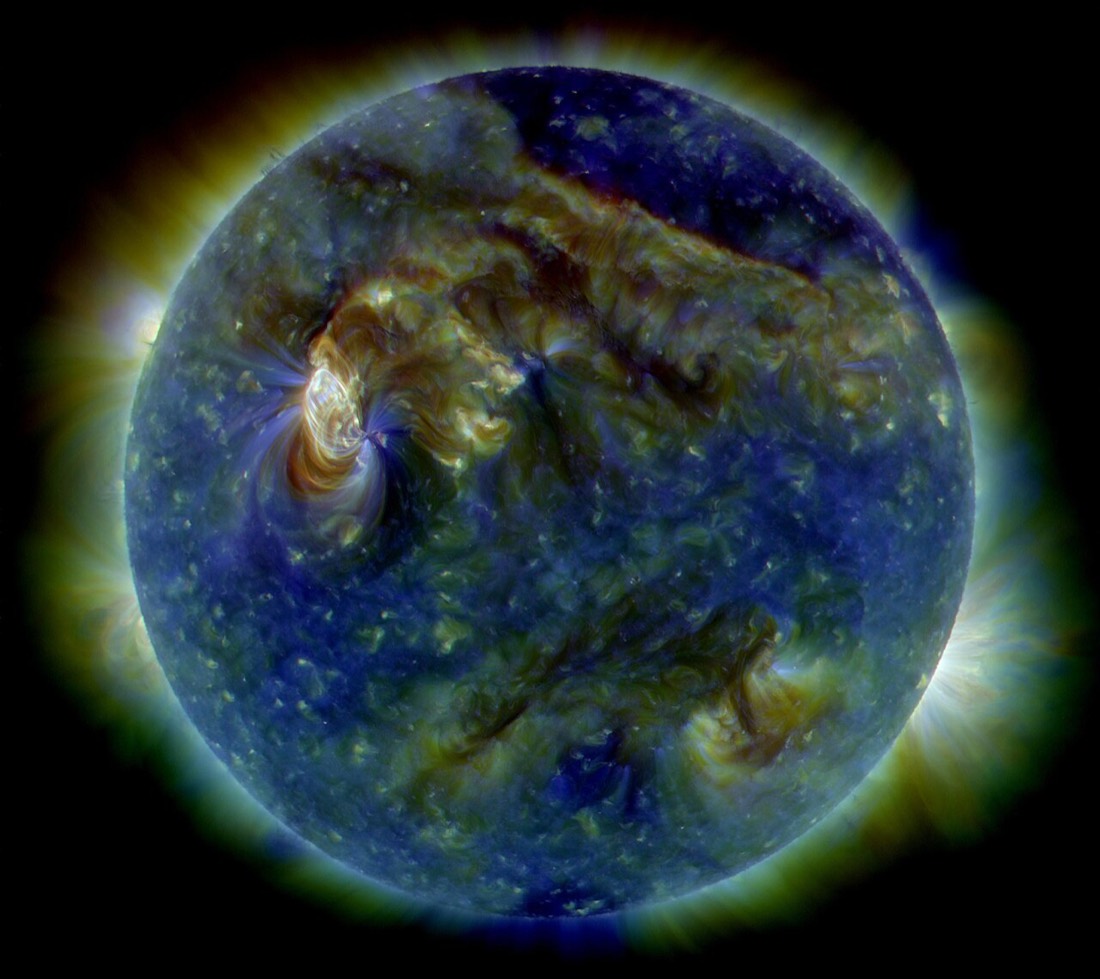
Sun ☉: identity, life force
- Cycle: 365.25 days to cross the zodiac (roughly one sign per month)
- Glyph: ☉
The Sun does not actually move. It is the Earth that orbits it. But from where we stand, the Sun appears to travel along the ecliptic once a year. That apparent journey is the origin of the Sun sign, the only one most people know: the sign the Sun occupied at the moment you were born.
Symbolically, the Sun is your conscious core of identity, your "I," your life force, the principle that animates your psyche. It is what you reach to express, to embody, to become. In the Jungian grid, it maps onto the Self as the principle of individuation.
The Sun runs weak when it is too diffuse (an introverted air sign) and strong when it has room to shine (a fire sign, or sitting on an angle).
Moon ☽: emotions, inner rhythms
- Cycle: 27.3 sidereal days (one sign every ~2.3 days)
- Glyph: ☽
The Moon changes sign every two or three days, making it by far the fastest body in the zodiac. That speed is why your Moon sign depends on the exact day you were born, and why it can differ even between siblings born a few days apart.
Symbolically, the Moon stands for your emotional world: your need for safety, the way you recharge, your instinctive reactions. It is what happens inside you when the Sun is not looking. Your intuition, your moods, the habits of your heart.
Together with the Sun and the rising sign, the Moon makes up what apps call the "Big Three," the three pieces of information you need for a basic chart.
Mercury ☿: thought, communication
- Cycle: 88 days around the Sun. Seen from Earth, about a year to cross the whole zodiac (but with multiple retrogrades)
- Glyph: ☿
Mercury is the planet closest to the Sun. From Earth it never strays more than 28° from the Sun, which means Mercury is always in the same sign as the Sun, or in the sign just before, or just after. The possibilities are tightly bounded.
Symbolically, Mercury governs thought, speech, writing, learning, exchange, commerce, curiosity. It is the messenger (Hermes to the Greeks, the go-between of the worlds). It describes your cognitive style: how you process information.
Mercury retrogrades more often than any other planet, three or four times a year, which earned it a huge pop reputation. More on that at the end of the chapter.
Venus ♀: love, values, aesthetics
- Cycle: 225 days around the Sun. About a year to cross the zodiac from Earth
- Glyph: ♀
Like Mercury, Venus is an inner planet (between Earth and the Sun), so it never wanders far from the Sun in the sky, at most 48°. Your Venus sign sits in a two-sign window around your Sun sign.
Symbolically, Venus governs love, pleasure, beauty, what we desire, what we value. It is what draws you, what you find beautiful, what feels good to you. Your aesthetic sense, your relationship to money (which in astrology connects to values, not circulation; circulation belongs to Mercury).
Mars ♂: action, desire, friction
- Cycle: 687 days around the Sun. About two years to cross the zodiac
- Glyph: ♂
Mars is the first planet beyond Earth's orbit, so it can sit at any angle to the Sun in the sky.
Symbolically, Mars is the drive to act, the will to impose itself, aggression, raw sexuality, the capacity to defend. It is what pushes you to do something rather than merely want it. The god of war, yes, but also of sustained effort, honest confrontation, courage.
Mars spends roughly two months in each sign, longer when it retrogrades and lingers.
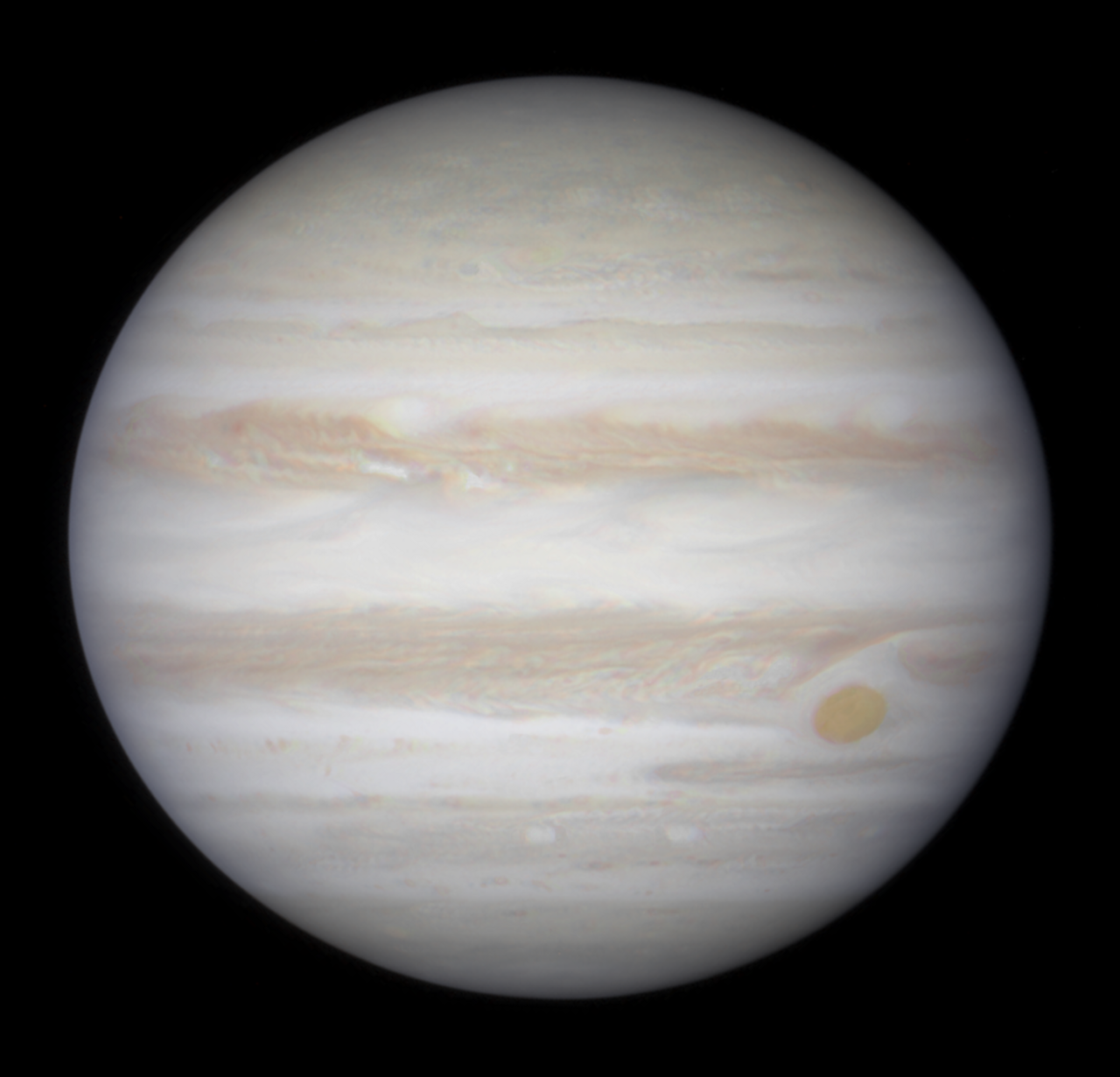
Jupiter ♃: expansion, meaning, opportunity
- Cycle: 11.9 years around the Sun. About 12 years to cross the zodiac (~1 year per sign)
- Glyph: ♃
Jupiter is the largest planet in the solar system, and the first slow body on our list. It spends about a year in each sign.
Symbolically, Jupiter is expansion, growth, luck, meaning, philosophy, the grand sweep. It is the function that widens your world through travel, higher study, key encounters, big syntheses. When Jupiter transits your chart, people say "a door opens."
The flip side: Jupiter can also mean excess, exaggeration, scatter. The planet that has you eating too much, spending too much, promising too much.
Saturn ♄: structure, limits, maturity
- Cycle: 29.5 years around the Sun. About 29 years to cross the zodiac (~2.5 years per sign)
- Glyph: ♄
Saturn is the functional opposite of Jupiter: where Jupiter expands, Saturn contracts. Where Jupiter promises, Saturn delivers the bill. It is the planet of long time, structure, limits, hard-won lessons, maturity.
It also rules authority (parents, institutions, laws) and self-discipline. The English word Saturday (Saturn's day) captures it well: a grave, serious, slow kind of day.
The Saturn return (around 29 to 30, when Saturn comes back to its natal position) is a classic life transition in astrology: the passage into adulthood in the psychological sense. A second return arrives around 58 to 60, a "second youth" or a reckoning with mortality.
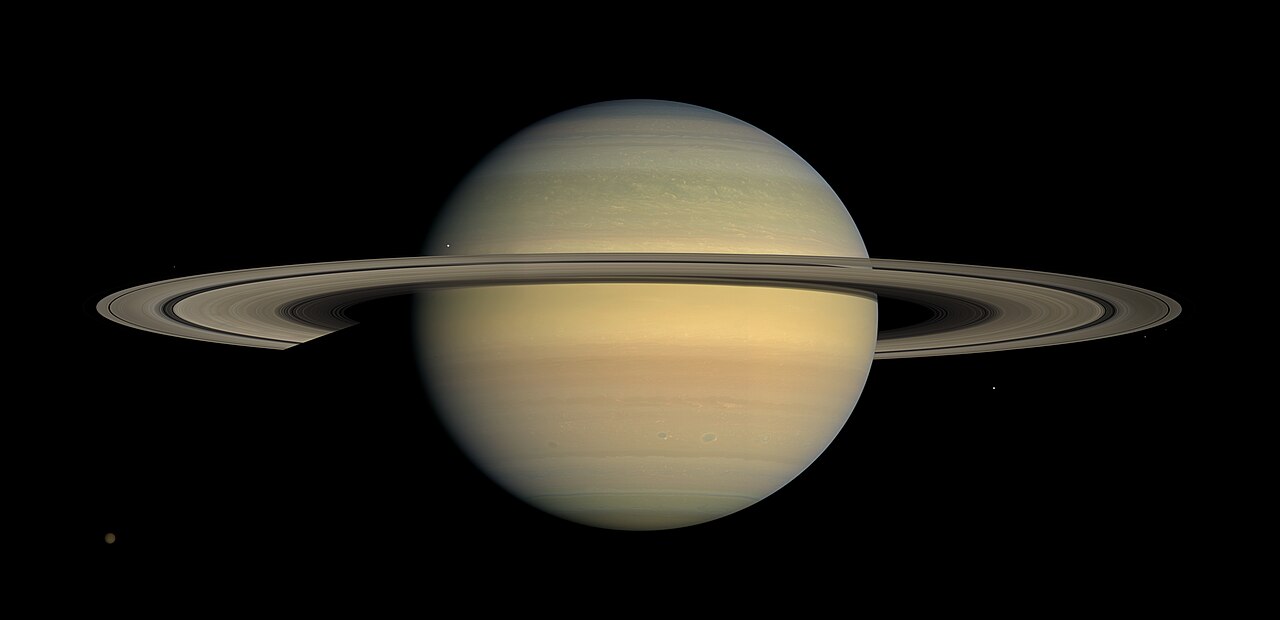
Key idea. Saturn is the last planet visible to the naked eye. For 4,000 years, astrology knew only the 7 traditional planets (the "luminaries" Sun and Moon, plus Mercury, Venus, Mars, Jupiter, Saturn). The next three, Uranus, Neptune and Pluto, were found through the telescope and folded into astrology one by one.
Uranus ♅: rupture, freedom, originality
- Cycle: 84 years to cross the zodiac (~7 years per sign)
- Glyph: ♅
- Discovered: 1781 by William Herschel
Uranus is the first "modern" planet, found through the telescope. Its arrival in astrology coincided with the French Revolution and the Industrial Revolution, which shaped how it gets read to this day.
Symbolically, Uranus is sudden rupture, claimed freedom, originality, invention, revolution, the sidestep. The planet that makes you walk away from what no longer fits. The unexpected, the lightning bolt, the new.
Because Uranus spends seven years in a sign, it already marks cohorts rather than individuals. A whole generation carries Uranus in the same sign.
Neptune ♆: imagination, dissolution, transcendence
- Cycle: 165 years to cross the zodiac (~14 years per sign)
- Glyph: ♆
- Discovered: 1846 by Le Verrier (calculation) and Galle (observation)
Neptune dissolves boundaries. Symbolically, it is imagination, dream, the mystical, art, universal compassion, and also confusion, illusion, addiction, escape. The planet that melts you into something larger than yourself through meditation, love, music, drugs, faith.
At 14 years per sign, Neptune colors the broad cultural moods of an era. Neptune in Scorpio (1956 to 1970) lined up with liberated sexuality and psychedelics; Neptune in Pisces (2011 to 2025) with the age of digital blur and fluid identities.
Pluto ♇: transformation, power, the depths
- Cycle: 248 years to cross the zodiac (12 to 30 years per sign, given its very elliptical orbit)
- Glyph: ♇
- Discovered: 1930 by Clyde Tombaugh
- Astronomical status: reclassified as a "dwarf planet" by the IAU in 2006. This changes nothing about its place in astrology.
Pluto digs. Symbolically, it is deep transformation, power, death and rebirth, what lies buried and eventually surfaces, obsession, taboo, radical regeneration. The planet that does not reform; it destroys, then rebuilds.
Pluto's orbit is highly elliptical (eccentricity 0.25), so it spends 30 years in some signs (Taurus) and only 12 in others (Scorpio). Pluto in Scorpio (1984 to 1995) is tied to the emergence of AIDS and the fall of the Wall; Pluto in Capricorn (2008 to 2024) to the 2008 financial crisis and the collapse of trust in institutions. Pluto enters Aquarius in 2024 and stays there until 2044.
Slow planets: what you share with your generation
Key idea. Uranus, Neptune and Pluto spend so long in each sign (7, 14, 12 to 30 years) that they mark whole generations rather than individuals. Everyone born between 2008 and 2024 has Pluto in Capricorn. That says more about their era than about their personal character.
For a slow planet to turn "personal," it has to be in tight aspect with a personal planet (Sun, Moon, Mercury, Venus, Mars), or sitting on an angle (the Ascendant or the Midheaven). Otherwise it stays generational.
This is why many astrologers focus on the 7 personal planets (Sun, Moon, Mercury, Venus, Mars, Jupiter, Saturn) to describe an individual, and treat the three slow ones as the backdrop of an era.
Retrograde motion: an optical illusion
Every so often you hear "Mercury retrograde, watch out!" What does it actually mean?
Astronomically, no planet ever reverses in space. They all orbit the Sun in the same direction. Retrograde is an optical illusion: seen from Earth, a planet sometimes appears to drift backward against the background stars, either because Earth overtakes it (the outer planets: Mars, Jupiter, Saturn, Uranus, Neptune, Pluto) or because it overtakes Earth (the inner planets, Mercury and Venus, which retrograde as they pass between Earth and the Sun).
It works just like passing a car on the motorway: for a moment the other car seems to slide backward against the scenery, even though it is still moving forward.
Approximate frequency and duration:
| Planet | Retrogrades per year | Duration |
|---|---|---|
| Mercury | 3 or 4 times | 3 weeks |
| Venus | every 18 months | 6 weeks |
| Mars | every 2 years | ~2 months |
| Jupiter | once a year | 4 months |
| Saturn | once a year | 4 to 5 months |
| Uranus | once a year | 5 months |
| Neptune | once a year | 5 months |
| Pluto | once a year | 5 to 6 months |
The Sun and Moon never retrograde.
Symbolically, astrology reads a retrograde planet as a function turned inward, under review, up for re-examination. Mercury retrograde means a good stretch for rereading what you wrote, redoing your notes, rethinking a decision, and a poor moment to sign a contract or launch a communication project. Venus retrograde: revisit past relationships. Mars retrograde: revisit your strategy. And so on down the list.
This reading is widely shared but not universal. Some traditional astrologers make far less of it than pop culture would have you think.
Recap
| Planet | Cycle | Symbolic function |
|---|---|---|
| Sun ☉ | 1 year | Identity, life force |
| Moon ☽ | 28 days | Emotions, inner life |
| Mercury ☿ | ~1 year | Thought, communication |
| Venus ♀ | ~1 year | Love, values |
| Mars ♂ | 2 years | Action, desire |
| Jupiter ♃ | 12 years | Expansion, meaning |
| Saturn ♄ | 29 years | Structure, limits |
| Uranus ♅ | 84 years | Rupture, freedom |
| Neptune ♆ | 165 years | Imagination, dissolution |
| Pluto ♇ | 248 years | Transformation, power |
Next chapter: the 12 houses, where we shift from "who" and "how" to "where in life."